

Support ASCF
If you liked this article, please share it with your friends and family. You can also help the American Security Council Foundation shape American policy.
Recent Articles




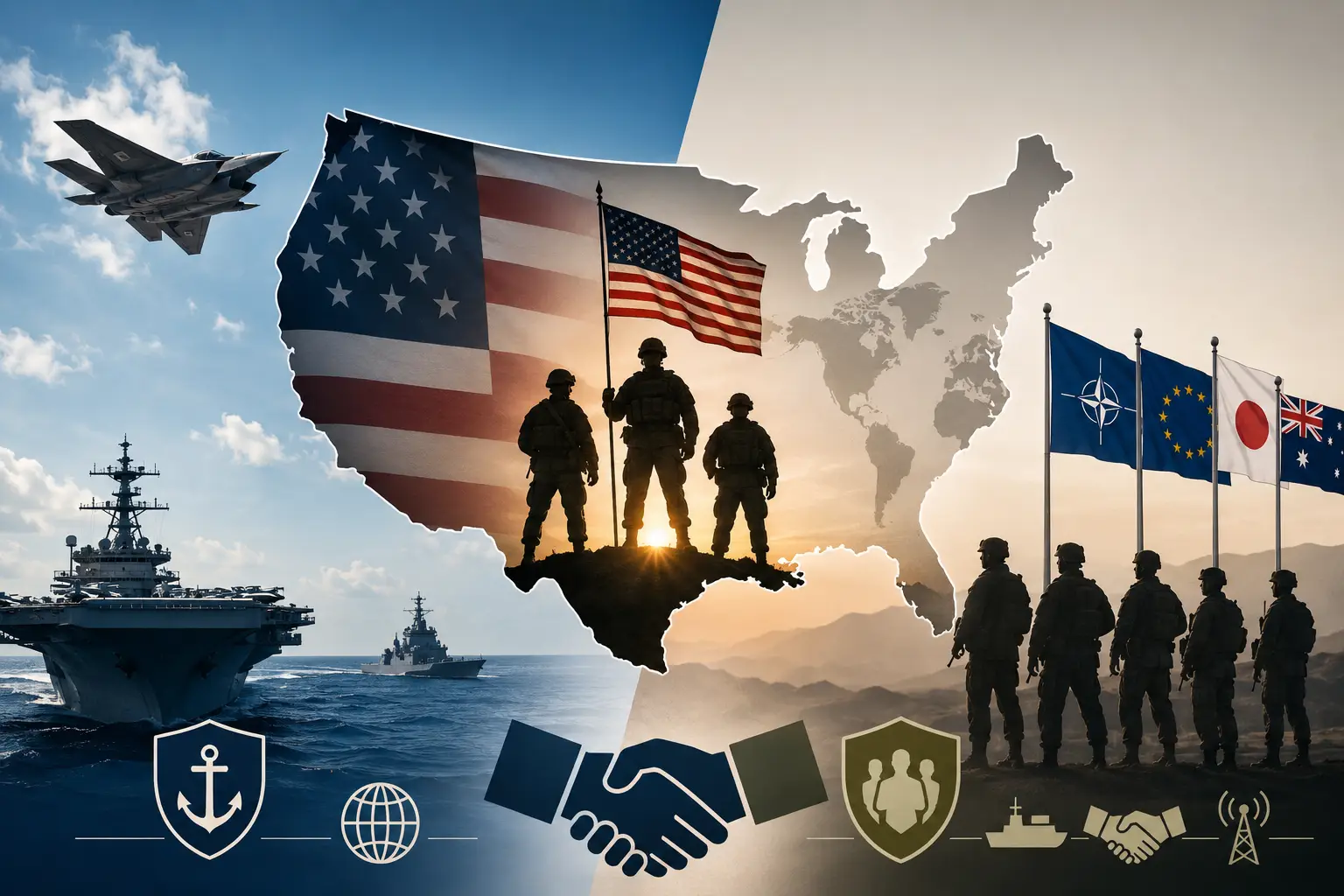
Bringing American Home Is Not Isolationism
Written by Tom Raquer
, Lieutenant Colonel (Ret.), United States Air Force,
Former Southeast Asia Foreign Area Officer
Why the Rest of the World Must Finally Share the Burden of Global Security
For more than eighty years, the United States has provided the foundation of the international security system. American naval power has protected the global commons, secured the world’s principal sea lanes, deterred aggression, and underwritten an unprecedented era of economic growth. No nation has contributed more to global stability.
That achievement, however, created an unintended consequence. Much of the world has grown accustomed to a security structure in which America bears a disproportionate share of the military burden. At the same time, many allies devote comparatively fewer resources to their own defense.
That model is becoming increasingly difficult to sustain.
Recognizing this reality does not mean the United States should abandon its alliances or retreat from the world. It means acknowledging that long-term strategic success requires a better balance between American leadership and allied responsibility. The debate is often framed as a false choice between global engagement and isolationism. There is another path.
America can remain the leading power within the alliance system while expecting capable partners to assume greater responsibility for their own conventional defense. This is not withdrawal. It is burden-sharing.
The strategic environment has changed dramatically since the Cold War. The United States now confronts simultaneous challenges in Europe, the Middle East, and the Indo-Pacific while managing rising fiscal pressures, expanding national debt, industrial competition, and increasing demands on the American armed forces.
No great power has unlimited resources.
Strategy choices must be made.
Every military commitment is an opportunity cost. Forces committed indefinitely to one theater create constraints that hamper freedom of action, none more important than America’s domestic challenges. Every dollar spent overseas represents resources unavailable for modernization, industrial resilience, or domestic readiness.
Sustainable leadership, therefore, depends upon sustainable commitments.
America’s allies have also changed. Many possess advanced economies, sophisticated industries, and capable militaries. Nations across Europe, the Indo-Pacific, and the Gulf increasingly possess the resources necessary to assume greater responsibility for regional security.
Encouraging them to do so strengthens—not weakens—the alliance system.
History demonstrates that alliances endure when responsibilities are shared rather than concentrated. Burden-sharing creates stronger partners, more resilient coalitions, and greater political legitimacy on both sides of the relationship.
Leadership, however, should not mean carrying every burden alone.
The United States should focus on missions only America can perform: strategic deterrence, protection of the global commons, long-range power projection, nuclear deterrence, intelligence integration, and coalition leadership.
Regional partners should increasingly assume responsibility for local conventional defense, maritime security, infrastructure protection, and crisis response. Such an approach allows American power to remain globally effective while encouraging allies to become more capable and self-reliant. It also strengthens democratic legitimacy at home.
The American people have repeatedly demonstrated their willingness to support alliances that clearly advance national interests. They are considerably less willing to support open-ended commitments that appear disconnected from those interests or that require Americans to bear disproportionate costs indefinitely.
A successful grand strategy ultimately depends upon maintaining public consent.
No foreign policy can remain sustainable if it consistently exceeds citizens’ willingness to support it. Bringing America home, therefore, should not be understood as a retreat. It means restoring balance between commitments and capabilities.
It means preserving American leadership by ensuring it remains politically, economically, and strategically sustainable. It means recognizing that leadership is strongest when responsibilities are shared.
Coming home is not isolationism. It is burden-sharing. And burden-sharing offers the surest path toward preserving both America’s alliances and the American Republic they exist to defend.