
Support ASCF
If you liked this article, please share it with your friends and family. You can also help the American Security Council Foundation shape American policy.
Recent Articles

The Strategic Environment Yet To Be Recognized
Written by Tom Raquer, Lieutenant Colonel, USAF (Ret.) Former Southeast Asia Foreign Area Officer
Why American Strategy Must Adapt Before the New Era Becomes Conventional Wisdom
The biggest problem with American politics is not dealing with the difficulties we have now. It is seeing the changing strategic environment before it becomes common knowledge.
As the distinctive circumstances that made globalization possible in the postwar era slowly go away, mobility, economic integration and geopolitical behavior are all evolving. Strategy must therefore react not to discrete events, but to the emergence of a strategically fundamentally changed environment.
FIVE MAIN POINTS
1. Strategic settings change before strategies change. The strategist’s first challenge is to detect fundamental change, even when others still see episodic crises.
2. Globalization was based on a superb security system under the leadership of the United States that allowed free flow of energy, business, finance, technology, and information.
3. Deglobalization is when that strategic foundation shifts. Efficiency is gradually giving way to resilience as the guiding notion of national policy.
4. Deglobalization is a symptom of the return of geopolitics. States reaffirm the importance of industrial capacity, energy security, technical leadership, and strategic autonomy.
5. In a geopolitical world, national resilience begins at home. At the end of the day, the foundation of American power is still knowledge and unity of the people.
The worst problem for strategists is their ignorance of the dying strategic environment. It is spotting the one that is now being formed.
A single remarkable occurrence rarely changes strategic parameters. As structural changes increase, they are progressively transformed until the assumptions that underpin one period can no longer explain the next. Most observers perceive these events as isolated crises. The strategist wants to understand the bigger picture they reveal.
Strategy has never been based on certainty.
Historians describe what happens after events occur. The evidence is gathered, and detectives put the facts together. Strategists do not have such luxury. Decisions must be made before certainty is reached, for waiting for complete verification usually means waiting too long.
So, the strategist is not someone who can predict the future, but who can see structural change before the repercussions of it are visible. It is easy today to think of wars and trade disputes and sanctions and supply-chain disruptions and industrial policy and disputed sea lanes and demographic pressures and regional competitiveness as separate things. They are, I think, symptoms of a fundamental transformation.
Globalization has had an amazing strategic base for close to eight decades. American military strength defended the sea commons but also provided the means to move energy, raw materials, manufactured commodities, finance, technology, and information with unprecedented freedom and predictability.
Globalization was thus never merely an economic phenomenon. And it was a strategy-based decision. Businesses were more efficient, supply chains grew longer, markets were integrated, and governments assumed that global mobility would be the normal state of international life so long as the underlying basis remained steady.
The presumption is moving now. With more strategic uncertainty, countries are shortening supply chains, reshoring key industries, diversifying suppliers and paying greater costs for more resilience. Security is more important than efficiency.
Hence, deglobalization is not merely a trend in the economy. It is the strategic consequence of a changing global scene.
As globalization wanes, geopolitics re-emerges as the normal condition of world affairs. States re-prioritize industrial capacity, energy security, technical leadership, logistics and national endurance. Once more, geography, long overshadowed by globalization, becomes a key factor in national strength.
The consequences extend far beyond foreign policy. Governments must consider industrial productivity, good infrastructure, budgetary sustainability, technical innovation, safe supply chains, and military strength. Power is becoming more total.
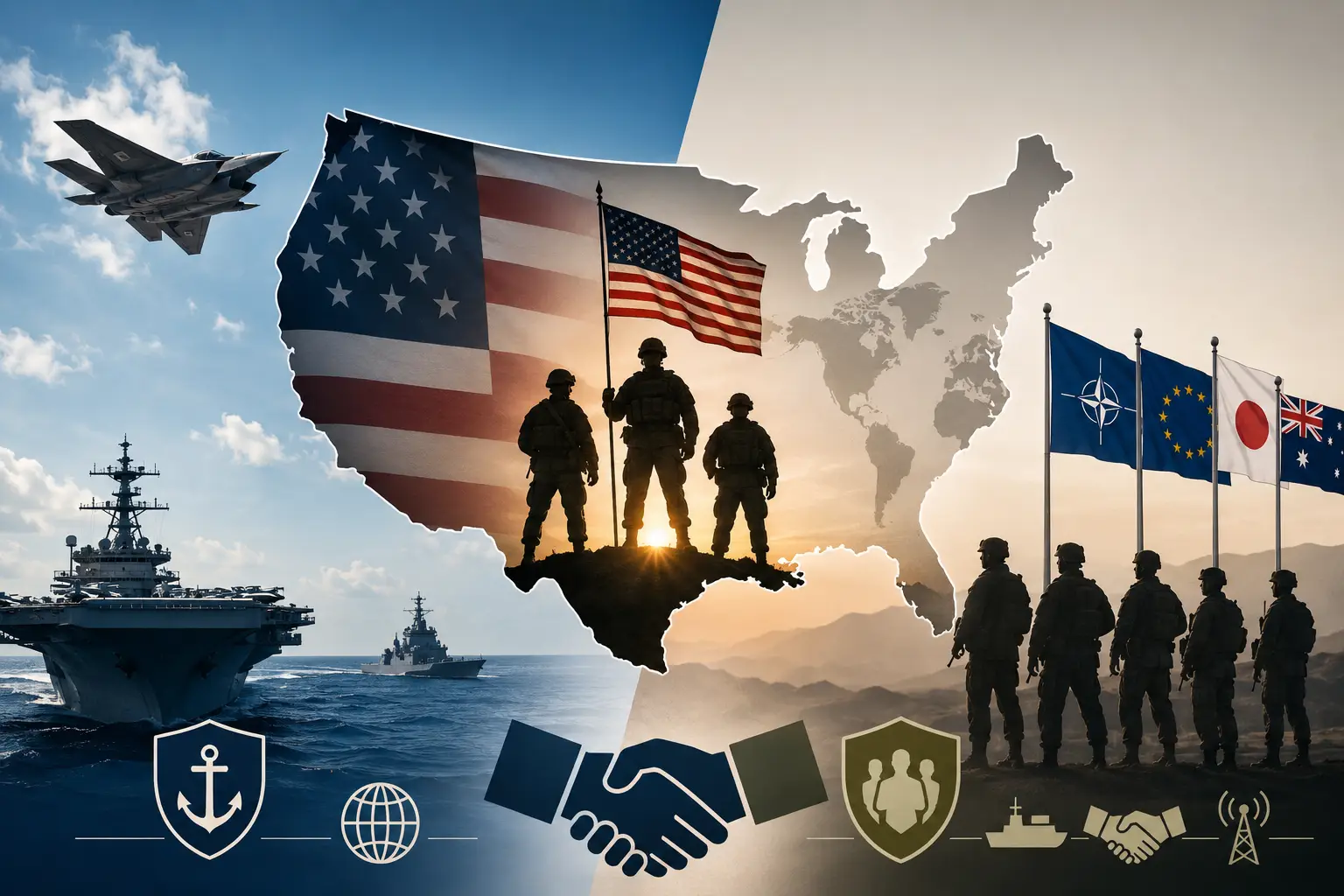
This changing climate also calls for rethinking alliances. Today many of America’s friends are wealthy and technologically advanced and are in a position to take on more responsibility for their own defense. The partnerships that work alter as the strategic context changes. If allies share burdens more equitably, the alliance becomes more sustainable—and thus stronger.
Not one of these is isolationism. Rather, it is the recognition that strategy must evolve with the strategic environment. Sustainable leadership is about aligning promises with national goals, resources, and the enduring consent of the American people. In the end, neither a foreign base nor a carrier strike group is the keystone of American policy.
It is the genuine American Republic.
I have argued for decades that the success or failure of a strategy hinges on whether the citizens can afford to absorb the price of the system they have created. Finally, industrial capacity, financial stability, military preparation, technological leadership, and constitutional legitimacy depend on informed citizens who will sustain them for generations.
Hence the constitutional focus is on the citizens. The first thing in strategy is to recognize the ability to perceive shifts in the strategic environment before they are clear to others. Recognizing the change in the organizing principle of national power from efficiency to resilience.
It is founded upon the people of the Republic.
The strategist’s first task is not to preserve the assumptions of yesterday. “It is to get the Republic ready for the future strategic environment.” That is what the strategist is to do.
History seldom proclaims the closing of one age and the beginning of the next. The role of the strategist is to recognize that tomorrow will not be yesterday and to prepare the Republic accordingly.
Tom Raquer, Lieutenant Colonel, USAF (Ret.) Former Southeast Asia Foreign Area Officer, MBA (Finance), University of Hull (Malaysia), The Citizen’s Strategist