
Support ASCF
If you liked this article, please share it with your friends and family. You can also help the American Security Council Foundation shape American policy.
Recent Articles

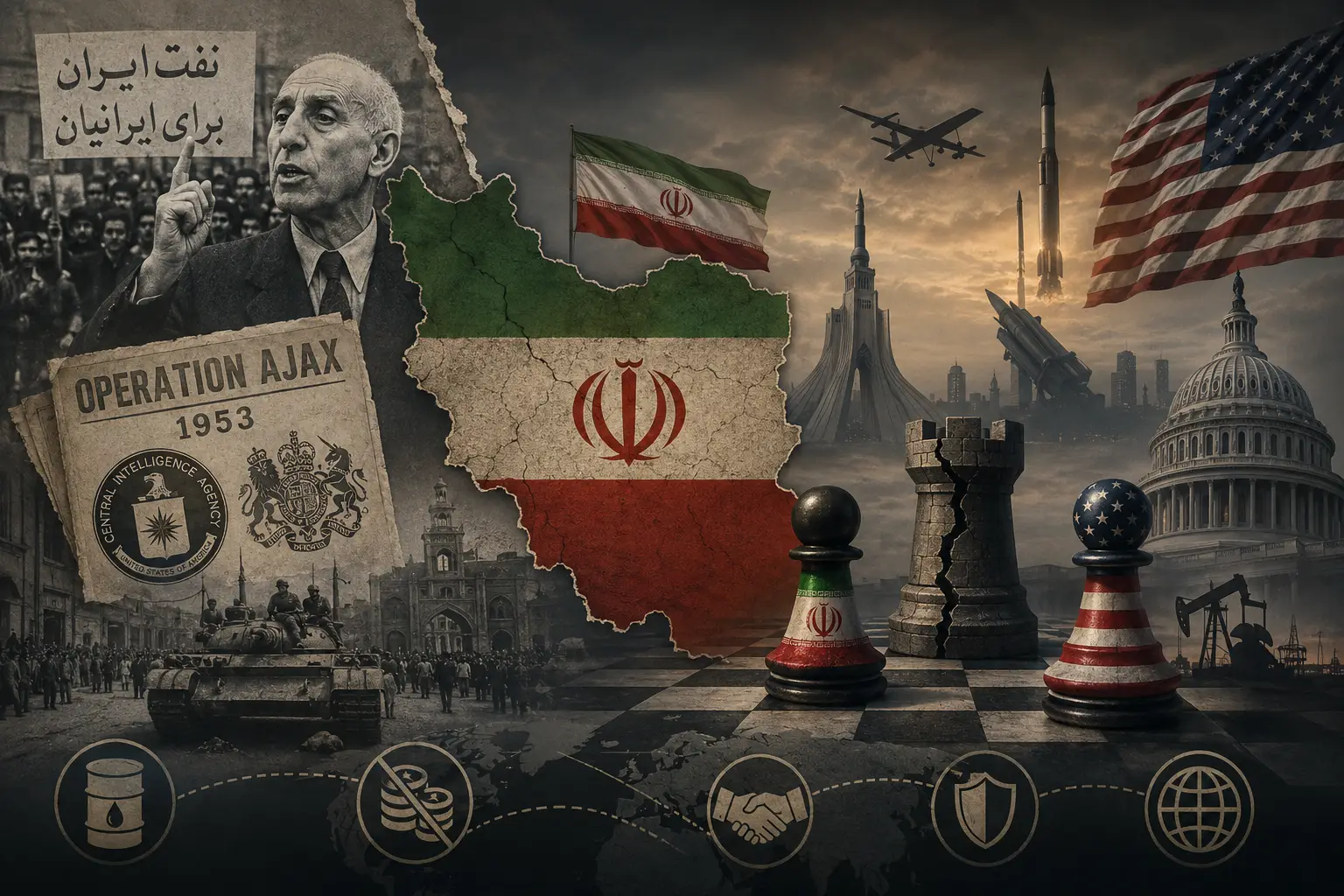
Why the 1953 Iran Coup Still Shapes U.S.–Iran Relations
Written by Tom Raquer, Lt. Col., USAF (Ret.)
Modern geopolitical competition is not shaped solely by military capability or economic pressure. It is also shaped by how states remember past intervention, coercion, and vulnerability.
Historical memory increasingly functions as a strategic variable. For many Americans, tensions with Iran are often viewed primarily through the lens of the 1979 Islamic Revolution, nuclear negotiations, sanctions, or proxy warfare. Yet from the Iranian perspective, the origins of the confrontation with the United States reach back much further — to the 1953 overthrow of Prime Minister Mohammad Mosaddegh.
THE COUP THAT NEVER DISAPPEARED
Mosaddegh was not an Islamist revolutionary or Soviet proxy in the simplistic terms often used during the Cold War. He was a constitutional nationalist who sought greater Iranian control over the country’s oil resources, which at the time remained dominated by the Anglo-Iranian Oil Company, later BP.
In 1951, Mosaddegh’s government nationalized the Iranian oil industry. Britain responded with sanctions, diplomatic pressure, and efforts to isolate Iran economically. In 1953, Operation Ajax — coordinated by the CIA and British intelligence — helped remove Mosaddegh from power and restore the Shah’s authority.
At the time, American policymakers viewed the operation through the framework of Cold War containment and fears of Soviet expansion. Iran’s strategic location and energy resources were considered too important to risk instability or possible communist influence.
In the short term, the operation appeared successful. Western access to Iranian oil remained secure, and Iran under the Shah became a major American regional partner.
The long-term consequences proved far more complicated.
The overthrow of Mosaddegh deeply damaged the legitimacy of moderate constitutional nationalism inside Iran. Many Iranians concluded that democratic pathways and political reform would not be tolerated if they threatened external strategic interests. That perception contributed to the growing legitimacy crisis surrounding the Shah’s increasingly authoritarian rule during the 1960s and 1970s.
The Islamic Revolution of 1979 emerged partly from those accumulated grievances, combining anti-Western nationalism, religious identity, and hostility toward foreign interference.
HISTORICAL MEMORY AS STRATEGIC TERRAIN
Today, Iranian leaders continue interpreting American pressure through that historical experience. This does not require accepting every Iranian narrative or policy position to recognize an important strategic reality: states respond not only to current threats but also to remembered ones.
Historical experiences shape how governments interpret:
- sanctions,
- military deployments,
- regime-change rhetoric,
- covert operations,
- and external pressure.
Modern Iranian strategy reflects this worldview. Tehran’s emphasis on missile deterrence, proxy networks, asymmetric warfare, and strategic partnerships with Russia and China partly stems from the belief that states lacking independent defensive capabilities are vulnerable to external destabilization.
The broader lesson extends beyond Iran itself. For much of the post–Cold War period, Western policymakers assumed that economic globalization and international integration would gradually reduce historical grievances and geopolitical mistrust.
Instead, many states integrated economically while keeping strong historical memories about sovereignty, intervention, and external coercion. That dynamic increasingly shapes the emerging multipolar environment.
THE RETURN OF STRATEGIC DISTRUST
The broader geopolitical environment is increasingly reorganizing around:
- historical distrust,
- sanctions resilience,
- strategic autonomy,
- and competing systems of power.
Across parts of the Global South, earlier Western interventions continue to influence:
- alignment decisions,
- sanctions resistance,
- de-dollarization efforts,
- and interest in alternative financial and security structures such as BRICS.
The strategic importance of the 1953 coup is therefore not confined to historical debate. Its relevance persists because it continues shaping how Iran — and many other states — interpret American power, Western intentions, and the structure of the international system itself.
Several policy implications emerge from this reality.
First, policymakers should recognize that deterrence alone does not shape adversary behavior. Historical memory shapes threat perception. Iranian leaders often interpret sanctions, military deployments, covert operations, and regime-change rhetoric through the accumulated experience of foreign intervention extending back to Mosaddegh’s overthrow.
Ignoring that historical framework risks misreading Iranian strategic calculations.
Second, prolonged coercive pressure can produce unintended strategic adaptation rather than compliance. Over time, sanctions and isolation encouraged Iran to deepen asymmetric capabilities, expand proxy relationships, strengthen missile deterrence, and pursue closer coordination with Russia and China.
States under sustained pressure often seek alternative systems designed to reduce vulnerability to external control.
Third, legitimacy is still a strategic variable. The destruction of moderate nationalist pathways in Iran contributed to the rise of harder ideological forces over time. Policymakers should remember that external pressure can unintentionally weaken more pragmatic political currents while strengthening actors that define compromise itself as dangerous.
THE LONG MEMORY OF STATES
The broader international environment is changing. Across much of the Global South, historical memories of intervention, sanctions, and externally imposed political outcomes continue shaping alignment behavior within the emerging multipolar system.
The United States increasingly competes not only against rival powers, but against accumulated distrust built over decades of geopolitical intervention.
Finally, strategy requires long-term thinking.
Tactical successes achieved through coercion or covert action can generate second-order consequences that emerge years or decades later.
The strategic challenge for American policymakers is not simply managing immediate crises, but understanding how present actions shape future geopolitical memory, legitimacy, and alignment structures over time.
In the emerging geopolitical era, historical memory itself has become part of the strategic terrain.
The strategic lesson is not that the United States should abandon competition or ignore security threats. Rather, policymakers must better understand how historical memory influences state behavior over time.
Nations often remember external intervention far longer than policymakers expect. And in geopolitics, those memories can shape strategy for generations.
Tom Raquer, Lt. Col., USAF (Ret.), is a Southeast Asia Foreign Area Officer and Indo-Pacific geopolitical risk consultant focused on maritime security, energy flows, strategic systems analysis, and long-duration geopolitical competition.