

Support ASCF
If you liked this article, please share it with your friends and family. You can also help the American Security Council Foundation shape American policy.
Recent Articles




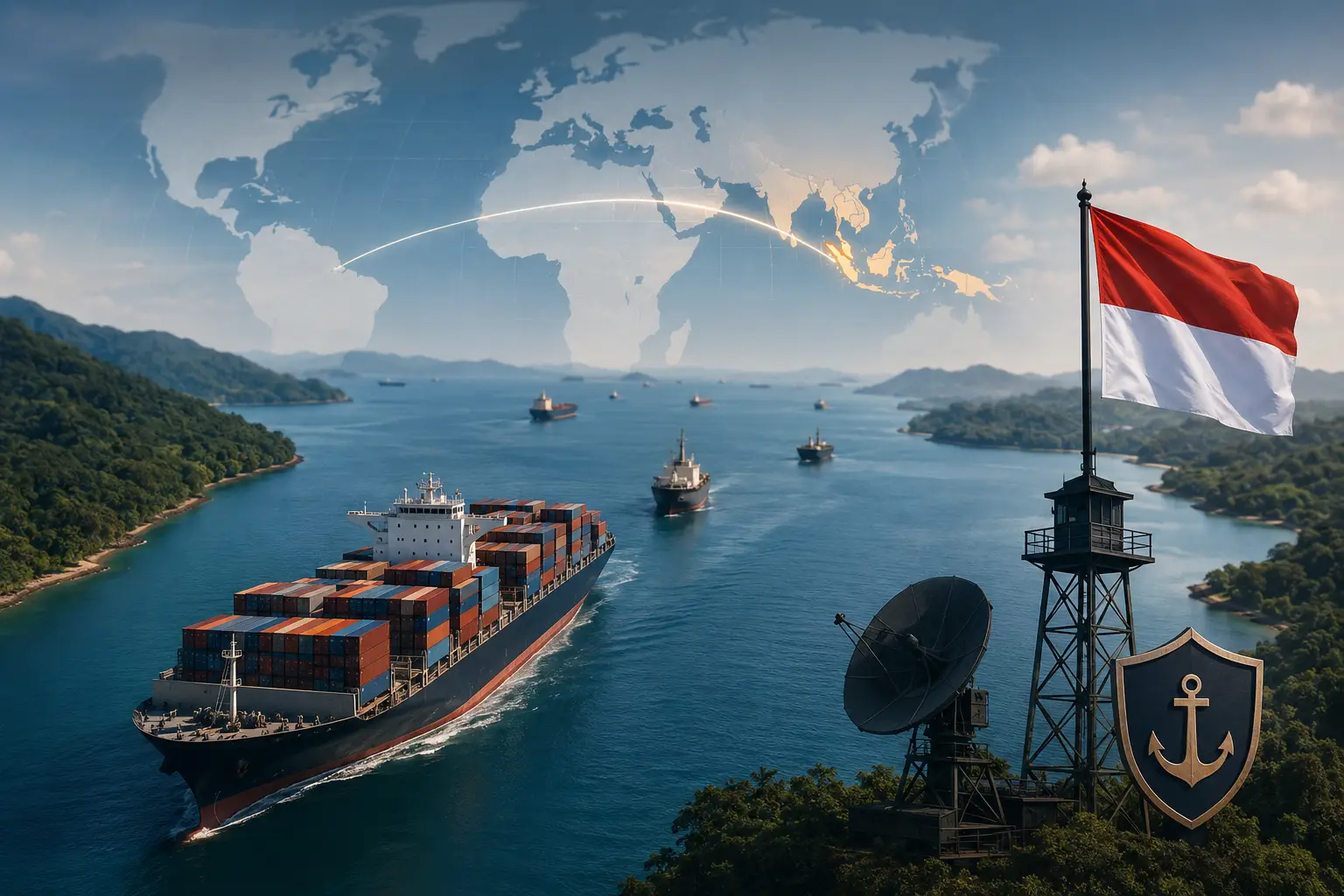
Strait of Malacca
Written by Tom Raquer Lt. Col. (Ret.), USAF
Southeast Asia Foreign Area Officer
The closure of the Strait of Hormuz led to worldwide economic stress and revealed a wider strategic vulnerability: when one global maritime chokepoint comes under pressure, attention quickly shifts to the next. That next chokepoint is the Strait of Malacca, which lies between the Malay peninsula and the Indonesian island of Sumatra and connects the Indian Ocean to the South China Sea and Pacific Ocean.
The disruption of maritime traffic through Hormuz earlier this year reminded policymakers that geography still governs power, trade, and energy security. Malacca carries one-quarter of global maritime commerce and serves as the principal artery for China’s imported energy. If Hormuz showed how rapidly a chokepoint crisis can reverberate through the global economy, Malacca revealed where the next strategic contest may unfold.
Although there are other ways from the Indian Ocean to the Pacific Ocean through the Sunda and Lombok Straits, they are less effective, longer, and more costly. They might offer short-term assistance in an emergency, but they cannot replace Malacca as China’s main maritime route.
Recent defense cooperation agreements between Jakarta and Washington reflect a growing recognition of Indonesia’s strategic importance. Expanded military exercises, defense modernization initiatives, professional military exchanges, and discussions concerning greater operational cooperation all demonstrate increasing American interest in Indonesia’s geographic position at the intersection of the Indian and Pacific Oceans. These efforts are not simply about strengthening bilateral ties. They reflect a broader understanding that Indonesia occupies a critical position astride some of the world’s most important maritime routes and will increasingly shape the strategic environment of the Indo-Pacific.
As shown by military exercises, modernization projects, and heightened security discussions, the United States is growing increasingly interested in Indonesia’s strategic location.
American leaders should avoid a common error. Indonesia does not want to rely on alliances. It is aiming for strategic independence. Indonesia has a long history of non-alignment and independent decision-making, which is reflected in this balanced approach.
While keeping connections with China, Russia, Europe, and regional allies, Indonesian President Prabowo Subianto has pursued closer ties with the United States. The strategic implications are obvious.
Any disruption of Malacca would place immediate pressure on Chinese energy security, industrial production, and economic activity. As competition between Washington and Beijing continues, the strait will remain central to strategic calculations on both sides. This reality helps explain Indonesia’s growing importance.
For many Americans, Indonesia remains one of the least understood major powers in the Indo-Pacific. Yet it is the world’s fourth most populous nation with 290 million citizens. It occupies one of the most strategically significant locations on earth. Positioned astride critical maritime routes connecting the Indian and Pacific Oceans, Indonesia possesses influence that is often underestimated in Washington policy discussions.
Expanded security talks, modernization initiatives, and military drills show that the United States is becoming more interested in Indonesia’s strategic location.
While preserving relationships with China, Russia, Europe, and regional partners, President Prabowo Subianto has pursued tighter ties with the United States. The long-standing Indonesian culture of non-alignment and independent decision-making is reflected in this balanced approach.
Many American strategists continue to view the Indo-Pacific primarily through the lens of the U.S.-China competition. While that competition is real, it is not the only force shaping the region. An increasing number of states seek security cooperation with the United States while keeping economic relationships with China. Their aim is not alignment. It is flexibility.
This creates both opportunities and limitations for American strategy. The opportunity lies in developing partnerships based upon shared interests rather than assumptions of automatic alignment. The limitation is that Indonesia will continue to make decisions based upon Indonesian interests rather than American preferences.
Recognizing this reality is essential. The lesson from Hormuz is not merely that maritime chokepoints stay important. It is that the states controlling access to those chokepoints are becoming increasingly strategic.
Indonesia’s importance derives not from military power alone but from geography, location, and its ability to influence maritime routes linking the world’s major economic centers.
THE STRATEGIC SUSTAINABILITY QUESTION
There is a second lesson American strategists should draw from Hormuz and Malacca. Geography may decide where competition occurs. But sustainability decides how long a nation can compete.
For many years, American decision-makers often believed that greater obligations equaled greater authority. However, every commitment needs public backing, political capital, logistics, and resources.
The question is no longer whether the United States can project power into the Indo-Pacific. The question is whether that strategy stays sustainable over time.
Indonesia understands this reality well. Its pursuit of strategic autonomy reflects a desire to preserve freedom of action rather than become dependent upon any single external power.
American strategists should ask a similar question. Not simply what the United States can do. But what the Republic can sustain.
Hormuz and Malacca remind us that distant maritime chokepoints eventually affect ordinary citizens through higher energy prices, inflation, supply-chain disruptions, and economic uncertainty.
In a constitutional republic, the citizen is still the ultimate center of gravity. No maritime strategy, alliance structure, or regional posture could endure indefinitely if the citizens expected to bear its costs no longer believe those costs serve the national interest.
The future balance of power in the Indo-Pacific may depend less on who controls Malacca than on whether Indonesia chooses to remain strategically autonomous while others compete around it.
Yet the larger lesson extends beyond Indonesia itself:
- Geography still matters.
- Maritime chokepoints still matter.
- Great-power competition still matters.
- In a constitutional republic, the citizen is still the ultimate center of gravity
No geopolitical position, alliance network, or military advantage can be sustained indefinitely without public legitimacy and national endurance.
Written by: Tom Raquer Lt. Col. (Ret.), USAF Southeast Asia Foreign Area Officer