

Support ASCF
If you liked this article, please share it with your friends and family. You can also help the American Security Council Foundation shape American policy.
Recent Articles


Japan Unveils New Security Strategy
Written by Alan W. Dowd, ASCF Senior Fellow
Japan is in the midst of a military buildup unprecedented in size and scope in the postwar era. With tyrant regimes on the rise and on the march, this is welcome news for America and other Indo-Pacific democracies.
Causes
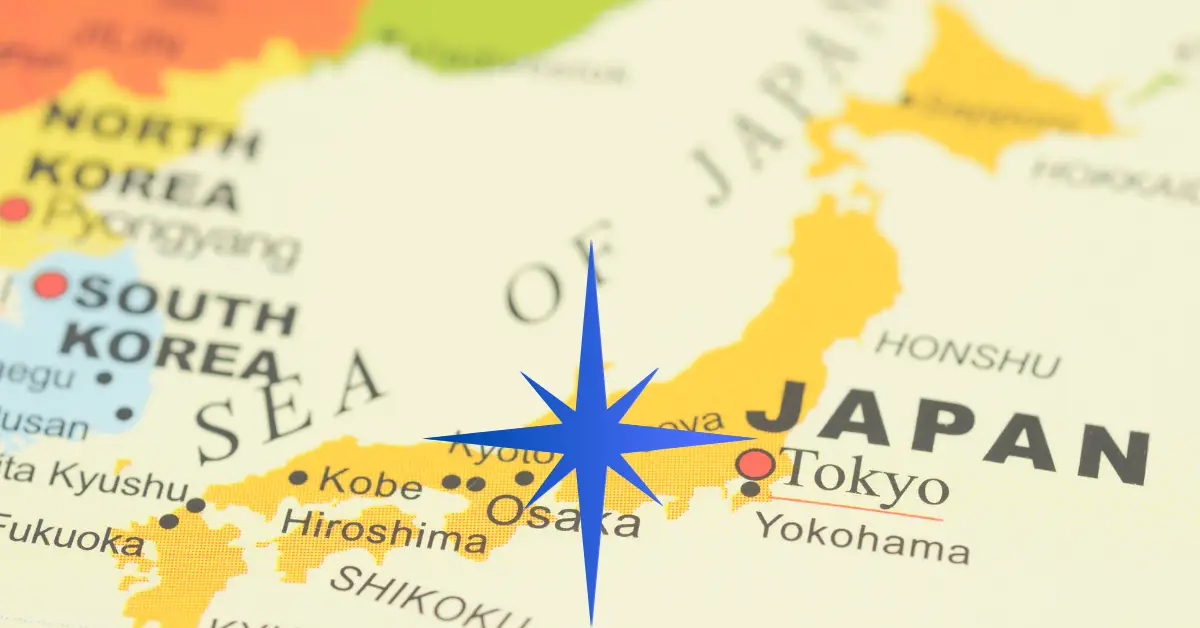
Before we dig into the specifics of Japan’s military buildup, it’s important to detail why Tokyo has been forced to walk this path. The answer can be found by glancing at a map and a newspaper. Japan has the misfortune of being in close geographic proximity to three of the world’s most aggressive tyrannies: the People’s Republic of China (PRC), North Korea and Russia.
PRC strongman Xi Jinping has erased Hong Kong’s independence; attacked democratic India; threatened attacks against democratic Taiwan; conducted a relentless cybersiege of the Free World; unleashed through incompetence a crippling global pandemic; expanded his nuclear arsenal and nuclear-strike capabilities; and engaged in a massive military modernization and expansion program. The PRC’s annual military expenditure has mushroomed 517 percent since 2000. On the strength of that spending binge, Xi is illegally laying claim to a vast swath of the South China Sea; constructing and militarizing illegal islands to back up those claims; loitering PRC vessels in Japanese waters for days at a time (according to a [RAND study], “Since mid-2014, on average, Chinese government vessels have penetrated the territorial seas [of Japan] seven to nine times a month”); and violating or encroaching on Japanese airspace (as many as 58 incursions per month). While the PRC accounts for 61 percent of those airspace incursions/violations, Russia accounts for the rest. In fact, just a few weeks ago, a package of Russian and PRC bombers provocatively flew over the Sea of Japan, skirting Japanese and South Korean airspace. That brings us to the threat to Japan posed by Vladimir Putin’s Russia.
Russia has launched wars of aggression against democratic Ukraine and democratic Georgia; committed war crimes across Ukraine and Syria; and propped up regimes that gas (Syria) and starve (Venezuela) their own people. Putin armed Taliban forces waging war against peacekeepers operating under UN mandate; has attacked Europe’s America’s energy infrastructure; issued military threats against democratic governments in Norway, Poland, Finland and Sweden; and has repeatedly threatened Japanese territories. Russian warplanes and warships routinely violate and/or threaten Japanese airspace and territorial waters.
North Korea recklessly and relentlessly conducts missile tests that threaten—and sometimes violate—Japan’s airspace. In 2022, the DPRK test-fired more than 90 missiles, including 23 on a single day. Some of the tests have triggered air-raid warnings in Japan.
Finally, Japan’s new National Security Strategy adds, “Cyberattacks have been used constantly to disable or destroy critical infrastructure.” Most of these attacks emanate from North Korea and the PRC.
Plans
Add it all up, and Japan is a nation under imminent threat and relentless assault in every domain and on virtually every side.
Japan’s National Security Strategy offers an overview of what this threat environment looks and feels like from Tokyo’s perspective.
The document describes the situation around Japan as “the most severe and complex security environment since the end of WWII.”
“China has been increasing its defense expenditures at a continuously high level and extensively and rapidly enhancing its military power, including its nuclear and missile capabilities, without sufficient transparency,” the document explains. “In addition, China has intensified its attempts to unilaterally change the status quo by force in the maritime and air domains, including in the East and South China Seas, such as its intrusions into the territorial waters and airspace around the Senkaku Islands.” China has “expanded and intensified its military activities that affect Japan’s national security in the Sea of Japan.” And China is “intensifying its military activities in the sea and airspace surrounding Taiwan.”
“Russia is accelerating its military activities in the vicinity of Japan,” the document notes. Moscow is “doubling down on strategic coordination with China.” And “By its recent aggression against Ukraine and others, Russia’s external and military activities…have shaken the very foundation of the international order.”
“North Korea has not carried out the dismantlement of all weapons of mass destruction and ballistic missiles of all ranges in a complete, verifiable and irreversible manner, in accordance with a series of relevant UN Security Council resolutions,” the document laments. North Korea “continues to heavily allocate its resources to military affairs” and has “launched ballistic missiles with an unprecedented frequency.”
Worse, Tokyo detects a weakening of the U.S. and other democratic partners. “It is becoming increasingly difficult for the United States, Japan’s ally with the world’s greatest comprehensive power, and international frameworks such as the G7 to manage risks in the international community and to maintain and develop a free and open international order,” Japan’s strategy document assesses. Washington’s Afghan pullout debacle surely influences Tokyo in this regard, as does America’s inadequate defense spending, which is barely keeping pace with inflation—and thus not keeping pace with China.
In light of all this, the National Security Strategy calls on Japan’s government and citizenry to “promptly realize the fundamental reinforcement of…defense capabilities” and “take the necessary measures to make the level of its budget, for both the fundamental reinforcement of defense capabilities and complementary initiatives, reach 2 percent of the current GDP” by FY2027.
That translates into a nearly-doubling of defense outlays for Japan. Part two of this series will explore how and where Japan is deploying these new capabilities and resources.