Why the Iran War Fails the Clausewitz Test
A war that begins without public support does not just face opposition—it works under a separate set of constraints from the start.
Most discussions of strategy do not begin there. They begin with capability—force structure, alliances, operational design. Those are easier to measure and compare. But they do not answer the question that tends to matter later: whether the effort can be carried long enough to matter.
In a constitutional system, that question does not sit with the military.
Carl von Clausewitz’s idea—war as the continuation of politics—still applies. But in a republic, politics is not fixed. It shifts. Support narrows, or fragments, or wears down over time. That movement becomes part of the battlefield whether planners account for it or not.
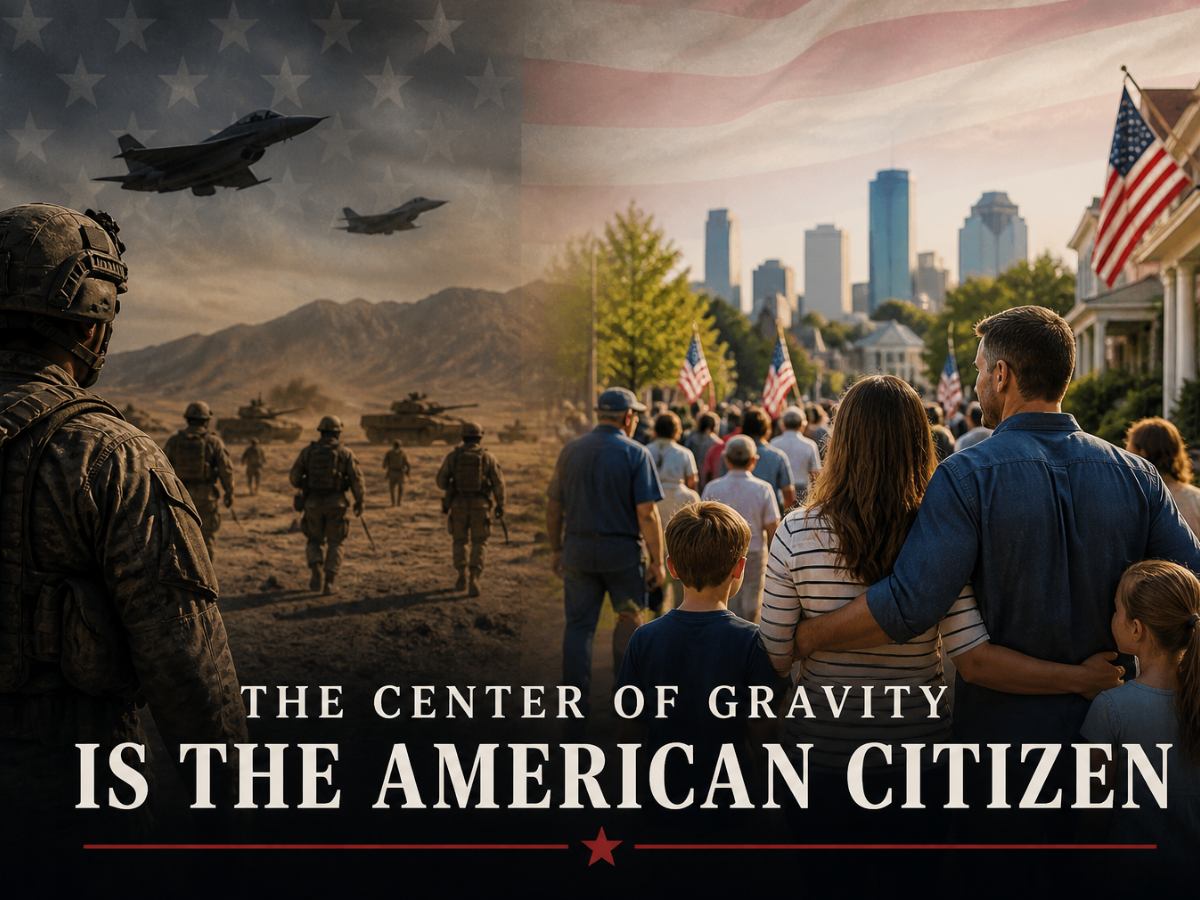
Which raises a point that tends to get softened: the centre of gravity is not the deployed force. It is the population that must bear the cost repeatedly, without a clear endpoint.
That changes the timeline.
Conflicts backed by broad support can stretch. They can absorb delay, even missteps. When that support is not there at the outset, the opposite happens. Time starts working against the strategy at once—not dramatically at first, just steadily.
The current situation with Iran fits that pattern more than we might want to admit. Public backing has been limited from the beginning, and that does not just affect messaging. It narrows options and compresses decision space in ways that are not always visible early on.
At that point, the dynamic starts to favor the side that does not need a quick resolution.
Iran does not have to win outright. It must stay engaged long enough for pressure to move inward. Võ Nguyên Giáp, general and military strategist for North Vietnam in the Vietnam War, worked from that logic, time as a substitute for strength.
The United States still holds the advantage in capability. That part is clear. The harder question is whether it can sustain the alignment needed to keep using that capability without internal strain becoming the dominant factor.
Those two do not always move together.
More broadly, the issue is not whether the United States stays powerful, but whether the system it has sustained since 1945 can continue to work at the same scale and cost under present conditions.
And when those pressures accumulate, outcomes tend to be decided elsewhere than on the battlefield.