
Support ASCF
If you liked this article, please share it with your friends and family. You can also help the American Security Council Foundation shape American policy.
Recent Articles
Dealing with It
Written by Alan W. Dowd, ASCF Senior Fellow
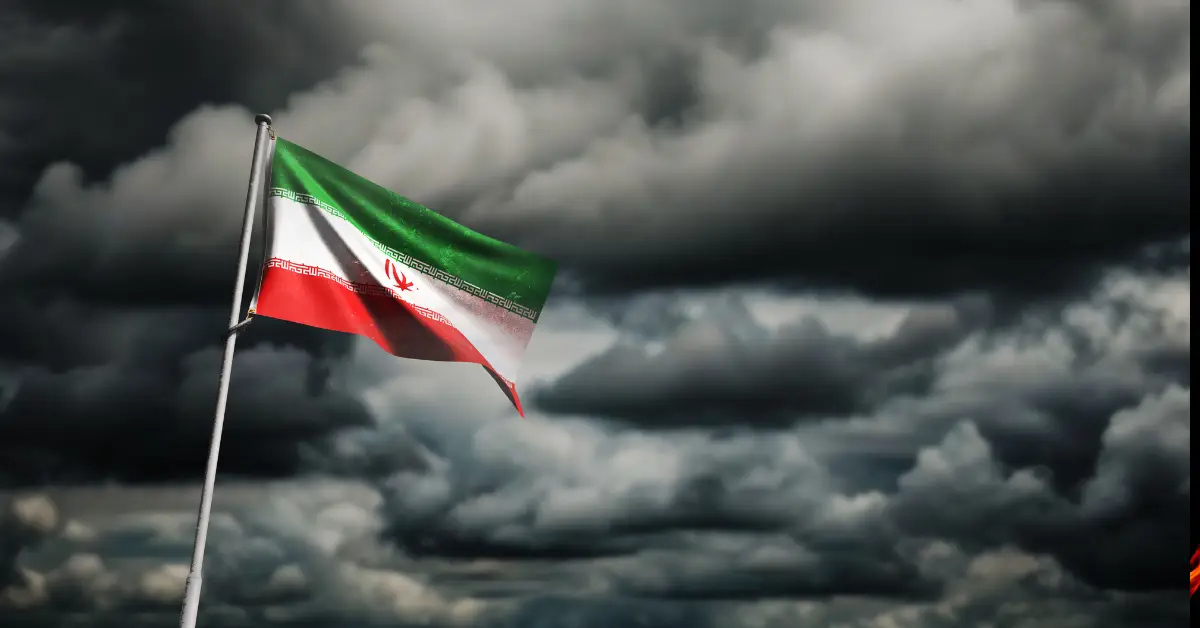
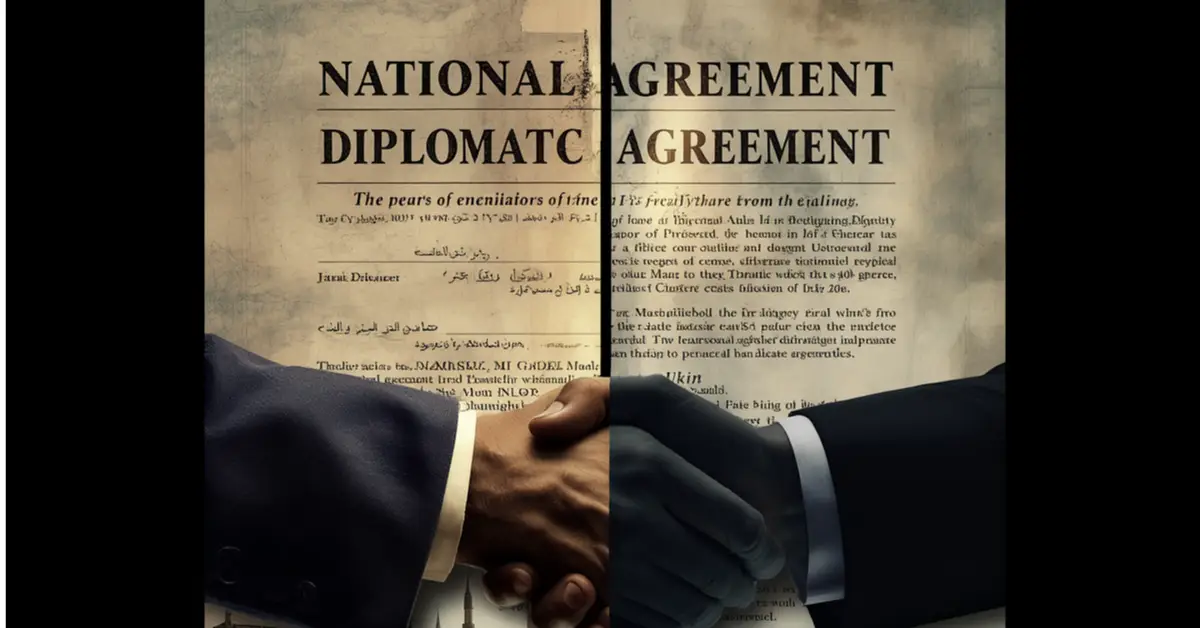
July 2026—Countless points and counterpoints have been made about the peace deal President Donald Trump signed last month ending hostilities between the U.S. and Iran. Most of those points and counterpoints aim to score political points. A better way to evaluate the deal is to compare what it says with what the president said before the war.
Nuclear
Before Operation Epic Fury (OEF), Trump called Iranian nuclear weapons “an intolerable threat.” He also observed, “You don’t have to enrich when you have that much oil…I say, no enrichment.”
That position was sound given Iran’s terrorist record, its apocalyptic creed, its threats against Israel and indeed its energy supplies. Iran has enough oil and natural gas to meet its energy needs for centuries, which calls into question its entire nuclear program.
OEF destroyed 80% of Iran’s nuclear-industrial base. However, it pays to recall that enough of Iran’s nuclear program survived OEF that Trump contemplated—after 40 days of airstrikes—sending ground troops to seize Iran’s remaining highly enriched uranium.
The peace deal declares, “The Islamic Republic of Iran reaffirms that it shall not procure or develop nuclear weapons.” Tehran made the same promise in 2015, under the Joint Comprehensive Plan of Action (JCPOA): “Iran reaffirms that under no circumstances will Iran ever seek, develop or acquire any nuclear weapons.”
That didn’t stop Iran from barring IAEA inspectors from nuclear facilities, failing to declare all of its nuclear activities or refusing to disclose hidden nuclear material.
Yet after he signed the peace deal, Trump raised eyebrows with this comment about Iran’s nuclear program: “It is a little hard that when…other people have it, other adjoining states have it, and you’re not letting them have it for purposes of electricity and things like that.”
That’s a far cry from the “no enrichment” position he previously held.
The problem with an Iranian nuclear power plant—and with any deal involving Iran—is the very nature of the Iranian regime. It’s a regime that cannot be trusted to keep its word, let alone use the atom for peaceful purposes.
Hormuz
Before the war, the Strait of Hormuz was an open waterway—and had been for decades. With the onset of hostilities, Iran attacked ships transiting the strait; declared passage through the strait would be possible only “via coordination” with Iran’s military; codified a tolling system for the strait; and warned that “no port” in the Hormuz region would be safe if the U.S. challenged Iran’s claims.
To his credit, Trump dismissed Iran’s actions as “totally unacceptable.”
Under the peace deal, Iran promises “safe passage of commercial vessels.” Yet the deal notes that Iran and Oman will “define the future administration and maritime services in the Strait of Hormuz.”
That’s code for fees, inspections and a Strait of Hormuz that’s not what it was before the war: a free and open international waterway.
Equally troubling, the opening paragraph of the peace deal gives Iran quasi-legal justification to stop abiding by other parts of the deal and to close the strait at its whim. Tehran did exactly that a day after the deal was signed, when the regime shut down the Strait of Hormuz, citing Israeli airstrikes in Lebanon. A week later, Iran resumed attacks on ships transiting Hormuz.
People
At the start of OEF, the president informed Iran’s beleaguered people, “the hour of your freedom is at hand,” urged them “to take over your government,” and condemned Iran’s “murderous regime.” A week into the war, Trump declared, “There will be no deal with Iran except unconditional surrender.”
The ferocity of the air campaign—obliterating command-and-control nodes, eliminating regime leaders, literally decapitating the regime—gave credence to Trump’s words.
Yet the peace deal says the U.S. will respect Iran’s “sovereignty and territorial integrity” and “refrain from interfering” in Iran’s “internal affairs.”
Translation: no regime change, no help for Iran’s longsuffering people, no unconditional surrender for Iran’s terrorist tyranny.
Regime
Soon after the 2025 airstrikes against Iran’s nuclear program, satellite imagery revealed Iran was scrambling to rebuild the facility at Natanz. As Trump observed, Iran’s rulers “had no intention of abandoning their pursuit of nuclear weapons.”
Under the JCPOA, world powers lifted sanctions that had forced Iran to blink, and Washington released more than $100 billion in frozen assets to Tehran.
As then-Secretary of State Mike Pompeo detailed in 2018, Iran “spent its newfound treasure fueling proxy wars across the Middle East and lining the pockets of the Islamic Revolutionary Guard Corps (IRGC), Hezbollah, Hamas and the Houthis.” He explained that after the JCPOA came into force, Iran equipped Hezbollah fighters; deployed soldiers to Syria; infiltrated Iraq’s security forces; bankrolled Houthi attacks against Saudi Arabia; armed Taliban fighters in Afghanistan; and continued to lie about its nuclear program.
That same year, Trump noted that his predecessor gave Iran $1.7 billion in cash, that Iran’s military budget grew nearly 40 percent after the JCPOA was signed, and that Iran “used the funds to build nuclear-capable missiles, increase internal repression, finance terrorism and fund havoc.”
All of this underscores why the Trump administration scrapped the JCPOA. (The Dowd Report was critical of that deal as well.) Yet the peace deal signed last month promises to release Iran’s frozen assets, totaling $100 billion. Plus, under the deal, the U.S. and regional partners pledge to develop a $300-billion reconstruction plan for Iran and “terminate” sanctions against Iran.
As it did before, Iran will use these resources to consolidate control within its borders, spread terror beyond its borders and wage war on America.
President Ronald Reagan labeled Iran the ringleader of “Murder, Incorporated”—a collection of terrorist states driven by “fanatical hatred of the United States, our people, our way of life, our international stature.” Nothing has changed since then.
Missiles
At the start of OEF, Trump declared, “We’re going to destroy their missiles and raze their missile industry to the ground. It will be totally…obliterated.” He added, “We are systematically dismantling the regime’s ability to threaten America or project power outside of their borders.”
The U.S.-Israeli barrage destroyed 80% of Iran’s missile-building capacity and 450 missile-storage facilities.
However, Iran’s drone and missile capabilities were not eliminated, as highlighted by Iran’s continued strikes during the so-called “ceasefire.” The deal makes no demand of Iran to dismantle its missile and drone programs. The president even said, “They have to have some [missiles] because other people have some.”
Again, that’s a far cry from the “totally…obliterated” position he previously held.
Leverage
With 90% of its economy dependent on seaborne trade, Iran lost $435 million in revenue per day due to the U.S. blockade. Iran couldn’t bear those costs much longer.
Yet under the deal, Washington agreed to end the naval blockade. The deal also lifted sanctions on Iranian oil exports.
Lost leverage for the U.S. translates into gained oil revenue for Iran—as much as $60 billion annually.
Playbook
Trump once observed that Iran has “never lost a negotiation”—a shrewd recognition that Iran’s rulers are adept at outmaneuvering their adversaries. Recall that the JCPOA was the offspring of nearly two years of negotiations—and that the U.S. and Iran held five rounds of negotiations in 2025.
The June peace deal envisions “a final deal within 60 days.” In other words, this deal merely teed up negotiations for another deal. And the negotiations that flow from this deal will yield more negotiations, more deals, more Iranian broken promises.
That’s Iran’s playbook. Iran’s rulers are masters of the Middle East bazaar, where haggling and haranguing, doubletalk and duplicity, is not a means to an end but an end in and of itself.
Capabilities
Tally it all up, and Churchill’s reaction to the Munich agreement comes to mind: an “unmitigated defeat.” But don’t take my word for it. Gen. H.R. McMaster, Trump’s national security advisor (2017-18), calls the deal “a disaster.”
However, even if the deal is less-than-ideal for America, the realities on the ground are less-than-ideal for Iran: Most of Iran’s nuclear program is under rubble. Layers of IRGC commanders have been eliminated. A large share of Iran’s industrial and military infrastructure has been destroyed. And the same capabilities—intelligence, military, reconnaissance—that erased the entire high command of the previous ayatollah are watching the new ayatollah’s generals, henchmen and uranium.
After Iran’s latest ceasefire violation—and America’s response—Trump said the deal is “over.” If so, good riddance.