

Support ASCF
If you liked this article, please share it with your friends and family. You can also help the American Security Council Foundation shape American policy.
Recent Articles
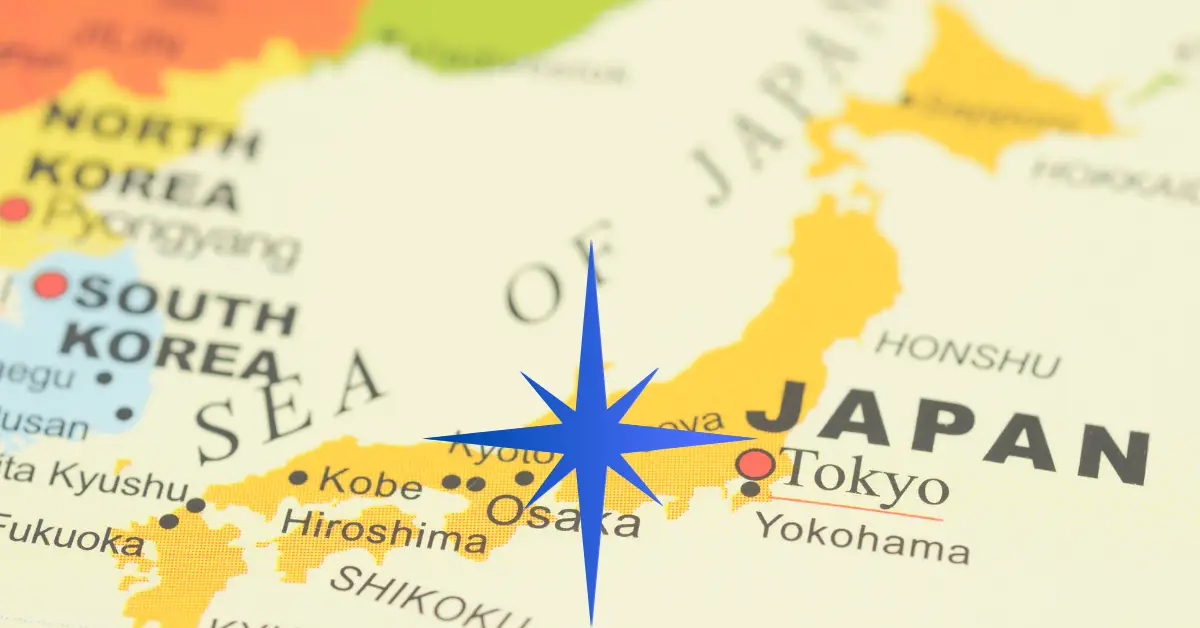
A Beacon in the Indo-Pacific
Written by Alan W. Dowd, ASCF Senior Fellow
Just as the island democracy of Britain was America’s key transatlantic ally during the Cold War, the island democracy of Japan is emerging as America’s key transpacific ally during Cold War 2.0. Japan is equal to the task and the moment.
Grave Concerns
For those who blame China’s neighbors for China’s actions, any discussion about Japan’s growing role on the world stage has to start with Beijing’s behavior.
Xi Jinping is engaging in the largest peacetime buildup in history, supersizing his navy, tripling his nuclear force, claiming 90 percent of the South China Sea based on a map drawn by Chinese cartographers, and constructing and militarizing illegal islands to annex the South China Sea piecemeal. About one-third of global shipping travels through the South China Sea, including 6 percent of America’s trade and more than 19 percent of Japan’s. Xi wants to become the gatekeeper of this critical sea lane—and in doing so, to hold sway over the prosperity of the free world.
In addition, Beijing has violated the territorial waters of Japan and the Philippines, hacked Japan’s defense ministry, assaulted Philippine vessels in international waters, bullied allied ships operating in international waters and territorial waters, and planted cyber-timebombs inside U.S. critical infrastructure.
And then there’s Taiwan. After absorbing Hong Kong in 2020—in brazen violation of international treaties—Xi vows to do the same with Taiwan. Toward that end, his henchmen are crashing Taiwan’s networks, cutting communications cables connecting Taiwan’s islands, interfering in Taiwan’s political system, ringing the island with military assets, and wargaming attacks on Taiwan. Adm. Samuel Paparo, INDOPACOM commander, warns that China’s military exercises around Taiwan are so fluid and constant that “Soon, we’ll be at a point where a force sufficient to execute a profound military operation is in the field and operating under a fig leaf of exercise.”
If all that wasn’t enough for Tokyo and Washington to worry about, North Korea regularly brandishes its nuclear arsenal, has conducted countless missile tests threatening Japan, and, thanks to its support for Putin’s war on Ukraine, has gained battlefield experience and an injection of high-tech weaponry.
Plus, Russian and Chinese bomber aircraft menace Japanese airspace hundreds of times each year.
As Prime Minister Sanae Takaichi of Japan observes, “Military activities…from our neighbors—China, North Korea and Russia—are causing grave concerns.”
In short, Japan’s military posture has grown more muscular because its neighbors have grown more aggressive.
Heavy Investments
Tokyo is doubling defense spending and will boast the world’s third-largest defense budget by 2027.
Japan is using those investments to buy squadrons of F-35 stealth fighter-bombers. In fact, Japan is second only to the U.S. in F-35 acquisitions. Some of Japan’s F-35Bs are assigned to a pair of warships that have been upconverted into full-fledged aircraft carriers (the Kaga and Izumo).
Tokyo also has invested in a fleet of 22 attack submarines and numerous Aegis missile-defense warships; 500 U.S.-built Tomahawk land-attack missiles; a homegrown missile with a 620-mile range that brings the Chinese mainland within reach; and defenses across its chain of islands between Kyushu and Taiwan.
Specifically, Tokyo is deploying combat units to these islands, honing rapid-deployment capabilities to defend these islands, and seeding these islands with anti-ship, anti-air and electronic-warfare units. One of the islands (Yonaguni) sits just 67 miles east of Taiwan.
Taken together, Japan’s island chain forms a natural barrier between China and the open ocean. As Tokyo lines its islands with precision-guided missilery, they are becoming a powerful deterrent to Beijing’s plans to absorb Taiwan by force.
Following America’s lead, Japanese warships have conducted freedom-of-navigation operations through the Taiwan Strait—an indication of Tokyo’s commitment to Taiwan’s independence. Takaichi’s top aide has visited Taiwan routinely—as have delegations from the Diet—drawing Beijing’s ire and underscoring Japan’s deepening concerns about Taiwan’s security. Importantly, Takaichi says any attack on Taiwan would be viewed as a “threat to Japan’s survival,” indicating Japan would assist the U.S. in defending the island.
Deep Collaboration
That brings us to the deepening cooperation between Japan and the U.S.
Japan hosts 50,000 U.S. troops, homeports a U.S. aircraft carrier, provides basing to fifth-generation U.S. warplanes, is opening Okinawa to U.S. F-15EXs and F-35As, is repairing U.S. warships at Japanese shipyards, and co-develops and networks missile-defense assets with the U.S. military.
Indeed, Japan is arguably America’s closest missile-defense ally. Japan hosts two AN/TPY-2 missile-defense radars; deploys eight Aegis missile-defense warships; and fields Patriot missile-defense batteries. After codeveloping the SM-3 Block 2A interceptor missile, the U.S. and Japan are now codeveloping a hypersonic-missile interceptor.
U.S. and Japanese forces train together in every domain under exercises such as Yama Sakura (ground assets), Iron Fist (amphibious assets), Resolute Dragon (rapid-deployment assets), ANNUALEX (naval assets), Cope North (air assets), Keen Sword (all-domain command-and-control assets), Resolute Force (air assets), Red Flag Alaska (air assets) and North Wind (cold-weather assets).
In cyberspace, U.S. and Japanese government agencies conduct joint exercises to prepare for cyberattacks. The cyberwarfare elements of their militaries cooperate extensively. Plus, Japan has a presence in NATO’s cyber-defense center and has participated in NATO’s Locked Shields cyber-defense exercise since 2021.
In space, the U.S. and Japan collaborate on military-satellite launches and payload sharing. The Pentagon recently stood up U.S. Space Forces Japan, which works closely with Japan’s Space Operations Command. And the two allies are partnering on a constellation of sensors and satellites to detect hostile missile launches.
True Ally
To its credit, Japan recognizes that as an advanced, prosperous, industrialized democracy, it has a responsibility to help other members of the free world defend their interests and their freedom. Indeed, Takaichi wants Japan to “be counted on by the rest of the world as a bright beacon in the Indo-Pacific.”
Toward that end, Japan has hosted exercises with India; entered into reciprocal access agreements with Australia, Britain and the Philippines to allow for joint training and to promote interoperability; and delivered armaments and training to Vietnam, Indonesia and especially the Philippines.
Japan has shipped long-range radar systems and coastal-defense vessels to the Philippines. Plans are in the works for Japan to transfer destroyers and antiship missiles to Manila. Japanese forces are engaged in combat training exercises in the Philippines.
Underscoring its commitment to free world defense and its expanding global role, Japan has provided counter-drone systems to Ukraine and transferred Patriot interceptor missiles to the U.S to backfill inventory sent to Ukraine.
Tokyo last year deployed F-15s to the United States, Canada, Britain and Germany. The globe-trotting deployment marked the first time in history that Japanese warplanes deployed to Canada and Europe, according to Defense News.
This year, after Iranian attacks against international shipping shut down the Strait of Hormuz, Japan joined other allies in developing plans and assembling assets for a multinational maritime escort operation. Japanese officials have confirmed they are exploring deployment of minesweeping units to help reopen the strait. And Takaichi recently launched a $10-billion emergency program to assist Southeast Asian nations in weathering the Hormuz oil crisis.
Add it all up, and Japan is an ally that truly contributes to the common defense. Washington should applaud and appreciate this—never dismiss or downplay it.