Support ASCF
If you liked this article, please share it with your friends and family. You can also help the American Security Council Foundation shape American policy.
Recent Articles

A Plan for War or Peace
Written by Alan W. Dowd, ASCF Senior Fellow
April/May 2026—U.S. and Iranian negotiators left the Islamabad peace talks light-years apart, with the Iranian side refusing to hand over its highly enriched uranium (HEU), end support for terror proxies, or reopen the Strait of Hormuz. Walking away from Islamabad with no deal was better for the United States than agreeing to a bad deal. Whether Islamabad leads to more bombing or more negotiation, Washington must remain committed to a set of core objectives—and must marshal the capabilities and partners to secure those objectives.
Vulnerabilities
Before getting into those objectives and capabilities, it’s important to take stock of what both sides gained and lost in their 40-day war.
As the Pentagon details, Operation Epic Fury destroyed:
-
- 80% of Iran’s air-defense systems, more than 450 missile-storage facilities and 800 one-way attack drone (OWAD) facilities;
- 90% of Iran’s weapons factories, including 80% of Iran’s missile facilities;
- more than 2,000 command-and-control nodes;
- more than 90% of Iran’s regular fleet and 95% of its naval mines; and
- 80% of Iran’s nuclear industrial base.
Yet the conflict exposed several U.S. vulnerabilities.
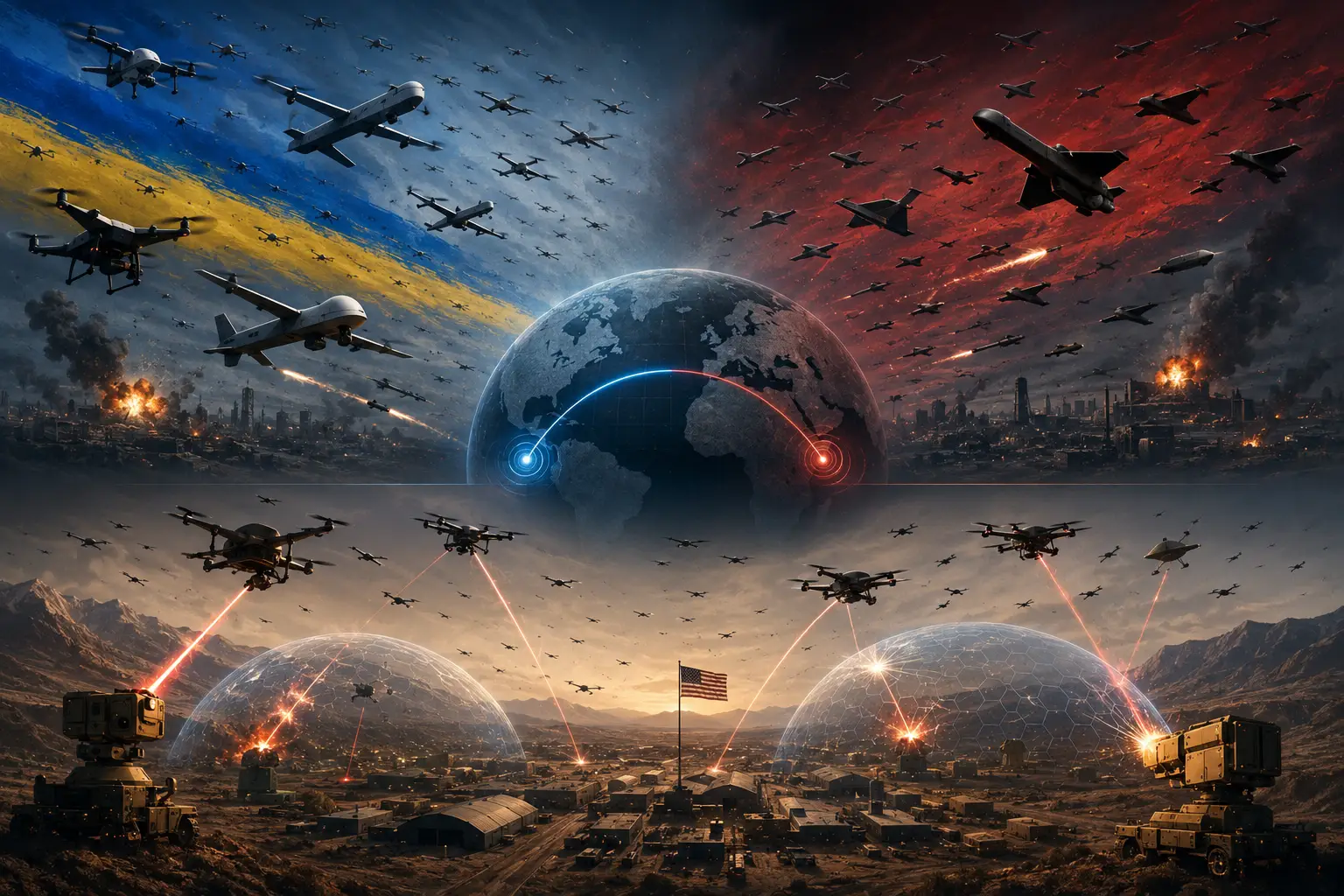
Topping the list are inadequate defenses against kamikaze-drones. OWADs killed six U.S. troops, destroyed or damaged eight U.S. warplanes, damaged multiple military facilities across the Gulf, and struck 25 commercial ships—enough to deter civilian and military vessels from transiting the Strait of Hormuz.
A second vulnerability exposed by the conflict: insufficient numbers of key assets. Several critical enablers, including midair refueling planes and AWACS planes, were lost. Almost 10% of the Reaper attack-drone fleet was lost. An AN/TPY-2 missile-defense radar system was destroyed. The war burned through stocks of Tomahawk missiles, THAAD interceptors and Patriot interceptors. And the war highlighted yet again that the Navy is not big enough to do all the things it’s asked to do. At the height of the Reagan rebuild, the Navy boasted 594 ships. Today’s fleet numbers just 296 ships.
These numbers underscore why allied help is crucial, which brings us to a third vulnerability: The war exposed a badly fractured U.S.-led alliance system. European allies were angered by the lack of prewar consultation. Indo-Pacific allies were angered by the war’s energy shock. Scarred by Iran’s missile and drone salvos—and forced to scramble for extra defenses mid-war—Gulf allies were angered by the lack of preparation. Israel was angered after being blindsided by the ceasefire announcement.
Cards
Defense Secretary Pete Hegseth concludes Iran suffered “a devastating military defeat,” which is true. However, the Islamic Republic emerges from the rubble with cards to play and capabilities to deploy.
First and foremost, for the Islamic Republic, survival is victory. After all, this phase of the war began with decapitation strikes that eliminated layers of Iran’s leadership—and aimed at regime collapse. Yet the regime endures.
Second, those regime leaders clinging to power are reportedly more extreme than their predecessors—a chilling thought given their predecessors’ brutality.
Third, Tehran has discovered a new weapon: control over the Strait of Hormuz. The strategically vital waterway accounts for 34% of global oil trade and 70% of food imports for Gulf states. Even with their battlefield losses, regime leaders retain significant asymmetric capabilities—capabilities Moscow and Beijing will continue to bolster—to hold Hormuz hostage. Indeed, Tehran defiantly declares that passage through the strait is possible only “via coordination with Iran’s armed forces,” has codified a tolling system for safe transit, and warns that “no port in the Persian Gulf and the Sea of Oman will be safe” if the U.S. challenges Iranian control over the waterway.
Objectives and Capabilities
The aim of war is to secure a political end-state that’s better than what existed before hostilities. To do that—to turn military success into durable political success—the administration should pursue the following.
I. Ensure a free and open Strait of Hormuz.
Freedom of the seas has been a cornerstone of America’s prosperity and security since President Thomas Jefferson waged war against the toll-extracting Barbary States. President Woodrow Wilson featured it in his Fourteen Points. President Franklin Roosevelt emphasized its importance in the Atlantic Charter. President Ronald Reagan defended it with military force when Libya claimed a vast swath of the Mediterranean and when Iran attacked commercial shipping in the Persian Gulf. In fact, since 1979, the Pentagon’s Freedom of Navigation Program has defended freedom of the seas around the world.
To allow Tehran to turn the Strait of Hormuz into an internal Iranian waterway would not only upend centuries of U.S. policy. It would undermine international conventions barring interference of movement through the strait; reward Iranian piracy; encourage China to press its illegal claims in the Taiwan Strait and South China Sea; and leave the U.S., its allies and international commerce in worse shape than before the war.
In response to Tehran’s intransigence, the president ordered a blockade of vessels entering or leaving Iranian ports. The logic of this is sound—either the strait is open to all or closed to all—and the effect of the blockade could force Iran’s backers to pressure Tehran to back down. However, even if they agree to reopen the strait, Iran’s rulers would still retain the ability to close it at will. To address that threat, Washington should leverage the capabilities of the Combined Maritime Forces to organize a multinational task force focused on securing the strait. Freedom of seas, like the flow of highway traffic, is only possible if there are agreed-upon rules—and only if there’s someone willing and able to enforce those rules.
II. Remain engaged to help allies in the region—and to keep enemies out of the region.
To support the mission of that naval task force, Washington could declare a no-fly zone over the southwestern corner of Iran, emphasizing that anything flying through that airspace will be treated as a threat to freedom of the seas. Washington could further bolster naval and air operations around the strait by deploying Ukraine’s battle-tested interceptor-drones and U.S. land-based surface-to-surface rocket systems in the UAE and Oman. For allies concerned about the blessing of international law for such defensive measures, Articles 51, 52 and 55 of the UN Charter check that box.
The administration reportedly encouraged Beijing to send warships to assist reopening the strait. Sharing Persian Gulf security responsibilities with China is shortsighted because it would turn the Gulf into an additional U.S.-China flashpoint, extend China’s reach and role, and expand China’s standing while diminishing America’s. Committing U.S. assets to the free flow of shipping through the strait and deepening defense cooperation with partners that share our interests will prevent that unwelcome outcome.
III. Tie the end of sanctions to removal of nuclear material.
Iran initially signaled willingness to surrender its HEU. This would be a major success for the U.S.-Israeli operation, would advance U.S. interests, would strengthen regional security, and would slow the momentum of nuclear proliferation globally. But Tehran has backtracked. Washington must make clear that all HEU will be verifiably removed—or repeatedly targeted by renewed airstrikes.
IV. Widen the Abraham Accords.
Saudi Arabia weathered numerous Iranian attacks. Was it enough for the kingdom to join many of its neighbors and finally recognize Israel? If the Saudis enter the Abraham Accords, Oman, Kuwait and Iraq could follow—further isolating Iran, cementing military cooperation between Israel and the Gulf states and bolstering the security of all those in Iran’s crosshairs, including the United States.
V. Use the bully pulpit to publicize regime brutality and promote a free Iran.
It was a welcome surprise when the president informed Iran’s long-suffering people, “the hour of your freedom is at hand,” urged them “to take over your government,” and detailed the brutality of the “murderous regime” that oppresses them—a regime that “killed 45,000 of their own people who were protesting.” The administration should build on this by drawing attention to the Islamic Republic’s political prisons and mass executions; shining light on the regime’s persecution and torture of religious minorities; enabling Iranians to access information beyond their borders; and providing dissidents with high-profile platforms to detail regime crimes.
“A little less détente,” Reagan argued, “and more encouragement to the dissenters might be worth a lot of armored divisions.” What was true of the Soviet Union holds true with the Islamic Republic.